Stock Split
Palantir Technologies Inc. (NASDAQ: PLTR) has established itself as an undeniable powerhouse in the fields of big data analytics and enterprise artificial intelligence (AI). Over the past few years, the company’s valuation has experienced an astonishing trajectory, growing from a market capitalization of $13.3 billion in 2022 to surpassing $360 billion by mid-2026.
As Palantir’s share price continues to trade at premium multiples, the financial community is actively debating a major corporate action: a potential forward stock split.
1. Understanding the Mechanics of a Stock Split
Before analyzing Palantir specifically, it is crucial to understand what a stock split actually does—and what it does not do—to a company’s corporate architecture.
A stock split is a corporate action in which a company divides its existing shares into multiple new shares to boost the stock’s liquidity. Although the number of outstanding shares increases by a specific multiple, the total dollar value of the shares remains exactly the same compared to pre-split amounts. The split does not fundamentally alter the underlying value or the real net asset value of the company.
The Fractional Pie Metaphor
Think of a stock split like cutting a pizza. If you have a single large slice of pizza, cutting it into four smaller pieces does not give you more food; it simply gives you more pieces of the exact same size pie.
For example, consider an investor who owns 100 shares of a hypothetical company trading at $200 per share. The total portfolio value is $20,000. If the company executes a 4-for-1 forward stock split, the following mathematical adjustment takes place:
New Share Count=100×4=400 shares
New Share Price=4$200=$50 per share
Total Portfolio Value=400×$50=$20,000
The total capitalization remains completely unchanged, but the barrier to entry for smaller market participants drops significantly.
2. Why Do Companies Like Palantir Split Their Stock?
When tech firms see their stock prices soar into the triple digits, their executive boards frequently assess structural stock splits. There are three core drivers behind this corporate practice:
Improving Retail Accessibility
Even in an era dominated by fractional share trading across major brokerages, psychological barriers remain powerful. Individual retail investors frequently hesitate to buy a stock when a single share costs $150 to $200 or more. By dropping the nominal absolute price through a split, a company opens its doors wider to everyday investors who want to buy whole shares with small, consistent cash injections.
Boosting Liquidity and Options Market Efficiency
A lower absolute stock price increases trading volume and narrows the bid-ask spread—which represents the difference between the highest price a buyer is willing to pay and the lowest price a seller is willing to accept.
Furthermore, this has a massive structural effect on the options market. A single options contract controls exactly 100 shares of the underlying stock. If PLTR trades at $200, a single standard call option requires covering $20,000 worth of underlying equity, making protective strategies or speculative trades expensive. If a split drops the stock price to $40, a standard contract covers just $4,000, drastically lowering premium costs and exploding institutional and retail options volume.
Corporate Compensation and Employee Incentives
Palantir relies extensively on stock-based compensation (SBC) to attract and keep elite software engineers and data scientists. Managing equity pools, restricted stock units (RSUs), and employee stock purchase plans is vastly easier when the stock is divided into smaller, highly flexible units. This allows the HR and corporate treasury departments to fine-tune equity bonuses down to specific granular values.
3. Palantir’s Historic Growth Trajectory and Valuation Realities
To understand why a stock split is such a critical topic for Palantir right now, one must look at the sheer scale of the company’s multi-year financial expansion. Palantir’s core business relies on three major software platforms, along with a transformative fourth pillar:
- Palantir Gotham: Built primarily for defense, counter-terrorism, and intelligence agencies within the United States and Western allies.
- Palantir Foundry: Tailored for massive commercial enterprises, enabling complex supply chain management, financial auditing, and operational optimization.
- Palantir Apollo: A continuous delivery system that ensures software can be deployed securely across public clouds, private networks, and physical edge environments.
- Palantir AIP (Artificial Intelligence Platform): The breakthrough engine driving the company’s recent massive growth, allowing enterprises to anchor large language models (LLMs) safely within private data ecosystems.
The Fundamental Numbers Behind the Surge
As of mid-2026, Palantir’s market realities present a fascinating case of high operational performance clashing with highly stretched market valuations:
| Metric | Current Market Standing (Mid-2026) |
|---|---|
| Market Capitalization | ~$364.8 Billion |
| Shares Outstanding | ~2.30 Billion |
| 52-Week Trading Range | $118.93 – $207.52 |
| Trailing Price-to-Earnings (P/E) | ~171x – 180x |
| Quarterly Revenue Run Rate | Grounded near $1.5 Billion per quarter |
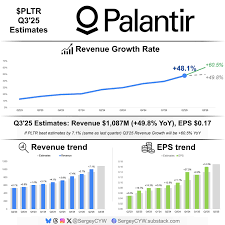
This massive surge has been powered by a near 74% year-over-year commercial revenue growth rate, alongside free cash flow projections hitting the $3.9 billion to $4.1 billion range. Because the stock has spent significant time testing ranges well above $150, Wall Street analysts are aggressively looking for tactical structural moves from CEO Alex Karp and the board of directors.
4. The Structural Hurdle: Palantir’s Massive Shares Outstanding
While many tech giants split their stock when the price crosses $100 or $200, Palantir faces a highly unique structural dynamic: an incredibly large share float.
When Palantir went public via a Direct Listing in late 2020, it did so with an immense pool of outstanding shares. Today, that number sits at roughly 2.30 billion outstanding Class A shares.
To put this structural reality into perspective, look at how Palantir’s share float compares to other multi-billion-dollar tech giants:
- Palantir (PLTR): ~$364B Market Cap | 2.30 Billion shares
- Typical Tech Giant Pre-Split: Might have only 500 million to 1 billion shares outstanding before electing to split.
Why the Massive Float Delays a Split
If Palantir were to execute a standard 5-for-1 stock split to drop a $150 share price down to a highly accessible $30, its outstanding share count would balloon from 2.3 billion shares to a massive 11.5 billion shares.
A massive share pool can sometimes dilute the perceived premium nature of a stock, making individual movements per share look highly fractionalized. This specific structural barrier is the primary reason why Palantir’s management has historically been patient, prioritizing top-line revenue expansion and net income consistency before focusing on administrative restructuring.
5. Historical Precedents: How Other Tech Giants Handled Stock Splits
When evaluating what a split could mean for Palantir, analyzing the historical patterns of other mega-cap technology firms provides invaluable insights. Over the last decade, companies like Nvidia, Apple, Amazon, and Alphabet have used splits to manage massive capital inflows.
The historical sequence of major tech splits typically follows a clear multi-stage market cycle:
[Split Announcement] ──> [Pre-Split Run-up] ──> [The Effective Date] ──> [Post-Split Valuation Correction]
1. The Announcement Phase
When a high-performing tech company officially announces a forward stock split, the market almost universally treats it as a massive vote of confidence from management. The announcement signals that the executive board believes the stock price is structurally stable enough to sustain its current levels, triggering immediate buying pressure.
2. The Pre-Split Run-up
Between the official announcement date and the actual execution date, institutional and retail momentum typically accelerates. Investors rush into the stock to capture positions before the nominal price drops, often causing a short-term price surge based entirely on market psychology.
3. The Execution / Effective Date
On the day the split becomes official, the share price drops by the corresponding divisor, and the share count adjusts upwards. Liquidity instantly spikes as retail buy orders that were previously priced out hit the market ledger.
4. Post-Split Valuation Normalization
Once the initial retail enthusiasm settles, the stock inevitably shifts back to its underlying fundamental valuation metrics. If the business fundamentals are rock-solid, the upward trend continues. If the split occurred at a highly overvalued multiple, the stock often experiences a temporary price correction as macro realities catch up.
6. Fundamental vs. Psychological Impacts on Investors
It is critical for both retail and institutional investors to clearly differentiate between the psychological catalysts and the fundamental realities of a corporate stock split.
Crucial Market Rule: A stock split is a purely cosmetic corporate action. It does not alter a company’s revenue, net margin, debt obligations, or total addressable market (TAM).
The actual impacts can be split into two distinct categories:
The Psychological Catalysts
- The “Affordable Stock” Illusion: A $35 stock feels inherently safer and cheaper to an uneducated retail investor than a $175 stock, despite both carrying the exact same underlying valuation multiples.
- Increased Media and Market Buzz: Stock split announcements generate massive waves of financial media coverage, focusing fresh retail eyes on the asset and driving short-term trading momentum.
The Real Structural Impacts
- Drastically Higher Options Liquidity: Institutional market makers can hedge positions much more effectively, leading to lower options volatility and significantly tighter bid-ask spreads.
- Broader Retail Inflows: Direct capital inflows from minor retail brokerages expand the overall retail shareholder base, creating a more diversified ownership structure.
7. Palantir’s Current Valuation Challenge: “Priced to Perfection”
As Palantir navigates 2026, the primary point of friction among Wall Street analysts isn’t whether the company’s AI technology works—it is whether the stock is simply too expensive right now. Trading at an aggressive P/E ratio over 170x, the company has explicitly been labeled by multiple benchmark institutional analysts as being “priced to perfection.”
The Institutional Divide
The Wall Street consensus on Palantir is sharply split into two highly distinct camps:
The Bull Case (Targeting $200+)
Bullish institutions, including Wedbush Securities, argue that Palantir is not a standard Software-as-a-Service (SaaS) enterprise. Instead, they view it as the ultimate operational platform for foundational AI deployment.
As enterprises transition from simple experimentation with AI models to deploying full-scale, autonomous “AI Agents,” Palantir’s AIP acts as the essential operating system. From this perspective, the current steep valuation premium is entirely justified by the company’s multi-year monopoly over enterprise AI integration.
The Bear Case (Targeting $90 – $110)
Conversely, more conservative institutions and noted short-sellers point out that a triple-digit P/E multiple leaves absolutely zero room for operational error.
If Palantir encounters any slowdown in commercial customer acquisition, or if free cash flow margins deviate even slightly from the projected $3.9B – $4.1B range, the stock faces a severe risk of sudden downward valuation corrections. For these analysts, a stock split right now would simply mask a highly overextended valuation multiple with short-term cosmetic hype.
8. Strategic Roadmap: How Investors Should Approach PLTR Today
Navigating a high-momentum asset like Palantir requires a disciplined, structured approach. Whether you are an institutional position trader or a long-term retail investor, your strategic playbook should be guided by specific rules.
Clear Execution Strategy
- Focus on AIP Customer Acquisition Growth Rates: Ignore short-term stock split rumors. Instead, closely monitor Palantir’s quarterly commercial customer count. Sustained growth above 40% in this segment is the true fuel required to maintain its current price levels.
- Utilize Dollar-Cost Averaging (DCA): Given Palantir’s high beta (historically hovering around 1.53), the stock is highly prone to wide market swings. Rather than deploying large lumps of capital at all-time highs, scale into positions gradually during macro market pullbacks.
- Track Institutional Accumulation vs. Insider Selling: Monitor SEC Form 4 filings to evaluate executive insider transactions. While minor executive sales are normal for diversification, large-scale institutional accumulation across major index funds provides a reliable gauge of long-term support.
- Maintain a Long-Term Investment Horizon: Palantir’s enterprise software cycles require multi-year implementations. Evaluate the stock on a rolling 3-to-5-year operational horizon rather than trying to time short-term price movements surrounding potential corporate split announcements.
9. Conclusion: The Long-Term Outlook for Palantir
Ultimately, a stock split is a powerful administrative tool that Palantir Technologies will likely deploy once its share price climbs high enough to firmly justify expanding its already massive share float. However, as an informed investor, it is vital to remember that the split is the wrapper, not the present.
Palantir’s ultimate destiny in the market won’t be decided by how many pieces its shares are sliced into. It will be decided by its ability to cement its software platforms as the foundational operating layer of the global AI revolution. By maintaining a laser focus on hard operational data—revenue growth, free cash flow expansion, and commercial scaling—you can look past short-term market noise and position your portfolio effectively for the long term.
About the Author