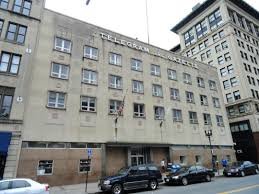
Telegram & Gazette
As the premier daily newspaper for Worcester County and the broader Central Massachusetts region, the Telegram & Gazette is more than just a distributor of ink on paper or pixels on a screen. It is a living archive of New England’s industrial rise, its economic shifts, and its cultural evolution. In an era where local journalism faces unprecedented existential threats, examining the history, adaptation, and enduring legacy of the T&G provides vital insights into the past and future of American civic life.
Part I: The Historical Foundations (1800s–1980s)
To understand the Telegram & Gazette as it exists today, one must dissect its dual lineage. The modern newspaper is the result of a merger between two fiercely independent and historically significant publications: The Worcester Daily Spy (which later evolved into aspects of the Gazette) and the Worcester Daily Telegram.
1. The Roots of the Gazette
The ancestry of the Gazette ties back to some of the earliest traditions of American printing. Worcester was a hotbed of revolutionary thought, famously home to Isaiah Thomas, the patriot printer who smuggled his newspaper, the Massachusetts Spy, out of British-occupied Boston to Worcester in 1775.
While the Spy eventually ceased publication in the early 20th century, its spirit of fierce community advocacy was absorbed by the Worcester Evening Gazette. Established in 1866, the Evening Gazette positioned itself as the definitive afternoon paper for the working-class families of Worcester, a city rapidly transforming into a manufacturing powerhouse of the Industrial Revolution.
2. Austin P. Cristy and the Rise of the Telegram
In 1884, a young lawyer named Austin P. Cristy founded the Worcester Sunday Telegram. Cristy saw a gap in the local media market: Worcester needed a bold, aggressive, and highly localized Sunday paper. The venture was an instant success, leading Cristy to launch the Worcester Daily Telegram in 1886 as a morning daily.
Cristy’s Telegram was known for its investigative grit and its willingness to challenge the city’s political elite. Under his leadership, the paper established a dominant market share, capturing the imagination of a rapidly growing immigrant population that moved to Worcester to work in its sprawling wire mills, textile factories, and machinery plants.
3. The Stoddard and Booth Era: Convergence and Monopoly
In 1920, a major shift occurred when Harry G. Stoddard (a prominent Worcester industrialist) and George F. Booth (the publisher of the Gazette) joined forces to buy the Worcester Daily Telegram and the Worcester Sunday Telegram. By 1927, they had consolidated their holdings, bringing both the morning Telegram and the evening Gazette under unified ownership.
Despite being owned by the same company, the two newsrooms operated with intense editorial rivalry for decades.
- The Morning Telegram: Focused on breaking hard news, regional coverage, and broader state and national politics.
- The Evening Gazette: Focused heavily on hyper-local Worcester city news, human-interest stories, and afternoon sports scores.
This dual-paper system allowed the company to dominate the Central Massachusetts media market for most of the 20th century, serving as the primary source of information for hundreds of thousands of readers.
Part II: The Golden Era of the 20th Century
Throughout the mid-to-late 20th century, the Telegram & Gazette entered what many journalists consider its “Golden Era.” Backed by robust advertising revenue from local department stores, manufacturing firms, and classified ads, the paper boasted a massive newsroom.
Regional Bureaus and Comprehensive Coverage
During this peak, the T&G did not just cover Worcester; it covered the entire “Heart of New England.” The paper established dedicated regional bureaus in surrounding towns and cities, including:
- Fitchburg and Leominster
- Southbridge and Webster
- Milford and the Blackstone Valley
- The Northboro/Southboro suburbs
This meant that residents in rural and suburban towns received a newspaper tailored to their specific local selectboard meetings, high school sports, and community events, alongside comprehensive national and international news wire reports.
The Blending of the Newsrooms
In 1989, reflecting national trends where afternoon newspapers were declining due to the rise of evening television news, the morning Telegram and evening Gazette were officially merged into a single, comprehensive morning newspaper: the Telegram & Gazette. The legendary evening edition was retired, but the combined entity retained the massive institutional knowledge of both historic newsrooms.
Part III: Corporate Hand-offs and Structural Shifts
The story of the Telegram & Gazette from the late 1990s onward mirrors the broader, turbulent macroeconomic narrative of the American print media industry. The era of local family ownership gave way to corporate conglomeration.
[Chronology of Ownership]
Chronicle Publishing Co. (1986) ➔ The New York Times Company (1999) ➔ Halifax Media Group (2014) ➔ GateHouse Media / Gannett (2015-Present)
1. The New York Times Era (1999–2014)
In 1999, The New York Times Company purchased the Telegram & Gazette for approximately $295 million. At the time, the acquisition was seen as a way for the Times Company to solidify its footprint in New England, pairing the T&G with its other major regional asset, The Boston Globe.
Under the stewardship of the New York Times Company, the T&G maintained high journalistic standards and won numerous regional awards. However, this period also coincided with the explosive growth of the internet, which fundamentally disrupted the traditional newspaper business model by decimating print advertising and classified revenue.
2. The Era of Consolidated Chains
In 2014, the New York Times Company sold the T&G to Halifax Media Group. Just a year later, in 2015, Halifax was acquired by GateHouse Media.
In 2019, GateHouse Media merged with Gannett, creating the largest newspaper publisher in the United States. Today, the Telegram & Gazette operates as part of the Gannett network. This corporate consolidation brought significant changes, including the centralization of page design, copyediting, and printing operations outside of Worcester, a move that drew mixed reactions from local media purists but ensured the paper’s survival through shared corporate infrastructure.
Part IV: Journalistic Impact and Pulitzer Recognition
A newspaper is ultimately defined by the quality of its journalism, and the Telegram & Gazette has a storied history of punching well above its weight class.
The 1953 Worcester Tornado
One of the most defining moments in the paper’s history occurred on June 9, 1953, when a massive, deadly F4 tornado struck Worcester and surrounding towns, killing 94 people. The staff of the Telegram and Gazette worked around the clock under blackout conditions, using emergency generators to publish definitive editions that provided vital safety information, casualty lists, and recovery updates. The coverage was a masterclass in crisis journalism and cemented the paper’s role as an indispensable civic utility.
Award-Winning Investigative Journalism
Over the decades, T&G reporters have exposed municipal corruption, highlighted systemic poverty, tracked environmental degradation in the Blackstone River, and chronicled the opioid crisis that hit Central Massachusetts heavily.
The paper has frequently been recognized by the New England Newspaper & Press Association (NENPA) as one of the top dailies in the region. Its columnists, photojournalists, and beat reporters have consistently won accolades for keeping a watchful eye on local government, the court systems, and Worcester’s massive healthcare and higher education sectors.
Part V: The Digital Transformation: Telegram.com
Like all legacy media institutions, the Telegram & Gazette had to reinvent itself for the digital age. The launch and evolution of Telegram.com marked a profound shift in how news is gathered and consumed in Central Massachusetts.
The Challenge of the Paywall
In the early days of the internet, news was largely offered for free online. As print advertising revenues declined, the T&G successfully implemented a digital subscription model (paywall). This shifted the financial burden of journalism back to the consumer, emphasizing the value of exclusive, hyper-local reporting that readers cannot find anywhere else.
Multimedia Journalism and Real-Time Reporting
Today, a T&G journalist is not just a writer; they are a multimedia storyteller. The modern newsroom utilizes:
- Breaking News Alerts: Instant digital reporting via social media platforms and mobile apps.
- Podcasts and Video: Audio and visual storytelling focusing on local politics, true crime, and Worcester’s vibrant food scene.
- Data Journalism: Utilizing interactive maps and databases to track local real estate trends, COVID-19 metrics, and city budgets.
Part VI: The T&G’s Role in Worcester’s Renaissance
To understand the relationship between the paper and the city, one must look at Worcester’s modern transformation. Once a declining industrial city, Worcester has undergone a massive economic and cultural renaissance, transforming into a hub for biotechnology, higher education, and minor-league sports.
The Telegram & Gazette has documented every step of this journey:
| Catalyst Event | T&G Coverage Focus |
| The Inception of Polar Park | Documented the financial negotiations, construction, and cultural impact of bringing the Boston Red Sox Triple-A affiliate (the Worcester Red Sox, or “WooSox”) to the city’s Canal District. |
| The Healthcare & Biotech Boom | Chronicled the expansion of the UMass Chan Medical School and the Worcester Polytechnic Institute (WPI) Life Sciences complex. |
| Cultural Evolution | Provided dedicated coverage of the city’s diverse food culture, the historic Mechanics Hall, and the Worcester Art Museum. |
Through its business reporting, restaurant reviews, and urban development features, the T&G acts as both a mirror and a catalyst for Worcester’s growth.
Part VII: Modern Challenges and the Future of Local News
The challenges facing the Telegram & Gazette in the mid-2020s are reflective of the systemic issues plaguing local news across the globe.
1. News Deserts and Diminishing Footprints
As newsroom staffs have downsized due to industry-wide economic pressures, covering every suburb with the same depth as the 1980s has become a steep uphill battle. Media analysts frequently warn about the rise of “news deserts”—areas where local government meetings go unrecorded and unscrutinized due to a lack of reporters. The T&G continually works to balance its core Worcester coverage with its historical commitment to the outlying towns of Worcester County.
2. The Fight for Trust in a Polarized World
In an era of rampant misinformation and political polarization, maintaining journalistic objectivity and community trust is harder than ever. The Telegram & Gazette combats this by doubling down on transparency, correcting errors swiftly, and keeping its editorial opinion pages distinct from its objective hard-news reporting.
3. Philanthropy and Community Support
To supplement traditional subscription and advertising models, the T&G has engaged with community-supported journalism initiatives. This includes participating in programs like Report for America, which places talented emerging journalists in local newsrooms to cover underreported beats, funded partly through philanthropic donations.
Conclusion: An Indispensable Civic Institution
The Telegram & Gazette has outlived the printing presses of the 19th century, the industrial monopolies of the 20th century, and continues to navigate the digital disruptions of the 21st century.
Democracy, at its core, relies on a shared set of facts. By showing up to school committee meetings, sitting through lengthy court trials, celebrating the achievements of local youth, and asking tough questions of public officials, the journalists of the T&G provide the glue that holds the Central Massachusetts community together.
As Worcester continues to evolve into a vibrant, forward-looking metropolis, the Telegram & Gazette remains its essential storyteller—a testament to the enduring power and absolute necessity of local journalism.
About the Author