Swiggy
Since Swiggy is currently a unlisted company preparing for its highly anticipated Initial Public Offering (IPO), it does not have a ticker symbol on public stock exchanges like the National Stock Exchange (NSE) or Bombay Stock Exchange (BSE). Instead, its financial worth is measured through private funding rounds, unlisted grey market valuations, and institutional benchmarks. This article provides an extensive analysis of Swiggy’s financial health, market valuation, competitive standing, and what investors can expect from its upcoming market debut.
1. Understanding Swiggy’s Current Market Status: The Unlisted Space
To talk about Swiggy‘s share price, one must first look at the unlisted or grey market. In the private equity ecosystem, shares of late-stage startups change hands among institutional investors, high-net-worth individuals (HNIs), and employees holding Employee Stock Ownership Plans (ESOPs).
What Controls the Value of Unlisted Swiggy Shares?
Unlike public markets where prices change second-by-second based on order books, the unlisted share price of Swiggy is driven by:
- Recent Funding Valuations: The valuation cap set by venture capital firms during the last official funding round.
- Peer Performance: How its direct public competitor, Zomato, is performing on the stock market.
- Grey Market Premium (GMP): The speculative premium that buyers are willing to pay ahead of the official IPO launch.
- Internal Financial Growth: Revenue growth, path to profitability, and the scaling of its quick-commerce engine, Instamart.
2. Evolution of Swiggy’s Valuation: From Startup to Decacorn
Swiggy’s journey from a small hyperlocal delivery service in Bengaluru to a massive conglomerate is backed by some of the world’s most prominent tech investors, including Prosus (Naspers), SoftBank Vision Fund, Accel, and Elevation Capital.
The Milestones of Private Funding
Swiggy crossed the threshold into unicorn territory (a valuation exceeding $1 billion) in 2018. However, its most monumental leap occurred during its Invesco-led funding round in early 2022, where it raised approximately $700 million, catapulting its valuation to $10.7 billion and earning it the coveted “decacorn” status.
The Post-Pandemic Valuation Adjustments
The tech sector globally faced a valuation correction between 2022 and 2024 due to rising interest rates and a shift in investor focus from “growth at all costs” to “sustainable profitability.” During this period, several institutional investors adjusted their internal books:
- Invesco’s Markdowns and Markups: Invesco holding funds initially marked down Swiggy’s valuation down to around $5.5 billion in mid-2023, reflecting global tech corrections. However, by late 2023 and throughout 2024, seeing an operational turnaround, Invesco consistently marked up Swiggy’s valuation back toward the $12 billion to $13 billion range.
- Current Pre-IPO Benchmarks: Investment banking sources suggest that Swiggy aims to target a public market valuation between $10 billion and $15 billion for its public debut, aligning closely with its peak private valuations but adjusted for current market realities.
3. Core Business Segments: Driving the Revenue Engine
To understand whether Swiggy’s unlisted share price or eventual IPO price offers good value, we must break down its business architecture. Swiggy is no longer just a food delivery app; it is an integrated hyperlocal logistics ecosystem.
Food Delivery
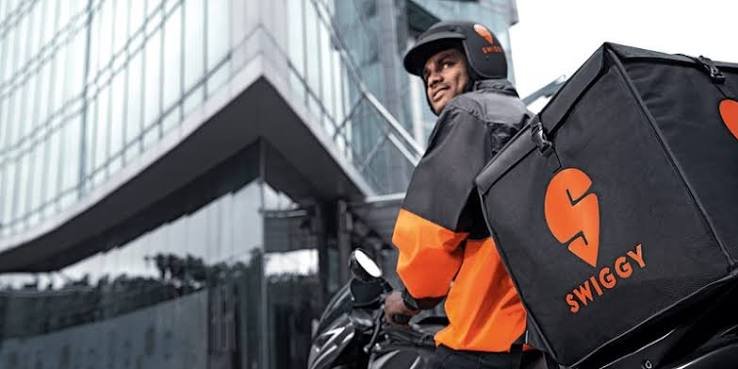
This remains the foundational pillar of Swiggy’s revenue. Swiggy operates a massive network of restaurant partners and delivery executives across hundreds of Indian cities. Revenue is generated via restaurant commissions, user delivery fees, and in-app advertising fees paid by restaurants to gain higher visibility.
Quick Commerce: Swiggy Instamart
Quick commerce has emerged as the primary growth driver for hyperlocal tech platforms in India. Launched to counter competitors like Zepto and Blinkit (owned by Zomato), Instamart delivers groceries, fresh produce, and daily essentials within 10 to 15 minutes. Instamart operates through a network of strategically located “dark stores” (micro-warehouses optimized for rapid packing). While asset-heavy and capital-intensive, Instamart commands a higher average order value (AOV) compared to traditional food delivery.
Swiggy Dineout
Acquired from Times Internet, Dineout allows Swiggy to capture the offline restaurant market. By offering discounts, table reservations, and event bookings, Dineout brings high-margin processing fees into Swiggy’s ecosystem and builds customer loyalty via its premium subscription service, Swiggy One.
Additional Hyperlocal Services
- Swiggy Genie: A customer-to-customer (C2C) pick-and-drop service for packages, documents, or forgotten items within a city.
- Swiggy Minis: An e-commerce enablement platform allowing local brands and D2C (Direct-to-Consumer) businesses to sell directly via the Swiggy interface.
4. Swiggy Financial Analysis: Revenue vs. Profitability
Public market investors demand clear pathways to net profitability. Let’s look at the operational metrics that determine the underlying value of a Swiggy share.
Revenue Trends
Swiggy has shown consistent double-digit growth in its consolidated revenue from operations. This growth is sustained by an expanding user base, increased ordering frequencies from “Swiggy One” subscribers, and the rapid adoption of quick commerce in Tier-1 and Tier-2 cities.
The Cost Structure and Operational Losses
Historically, Swiggy’s primary expenses have centered around:
- Delivery Infrastructure Costs: Payouts, incentives, and insurance for the massive delivery fleet.
- Customer Acquisition and Marketing: Discounts, promotional codes, and massive advertising campaigns to sustain brand recall.
- Dark Store Expansion: Real estate lease costs, inventory holding costs, and supply chain logistics for Instamart.
While Swiggy operated at heavy net losses for years, recent financial disclosures show a significant narrowing of these losses. The core food delivery business has achieved operational break-even (contribution margin positive), leaving quick-commerce scaling as the primary area of ongoing investment and cash burn.
5. Comparative Analysis: Swiggy vs. Zomato
Any evaluation of Swiggy is incomplete without comparing it to its fierce public rival, Zomato. Zomato’s stock performance on the NSE and BSE serves as a direct mirror for how public markets will price Swiggy.
| Financial & Operational Metric | Zomato (Public Benchmark) | Swiggy (Pre-IPO Status) |
| Market Status | Listed (NSE / BSE) | Unlisted / Pre-IPO |
| Core Strengths | Highly optimized food delivery, profitable Blinkit engine | Integrated ecosystem, strong Dineout presence, robust “Swiggy One” loyalty |
| Profitability Profile | Achieved consolidated net profit profitability | Food delivery positive; narrowing consolidated net losses |
| Quick Commerce Play | Blinkit (Market Leader in multiple regions) | Instamart (Stiff competition, expanding dark store footprint) |
What Swiggy Can Learn from Zomato’s Stock Journey
Zomato went public with an oversubscribed IPO, witnessed a massive post-listing crash as lock-in periods expired and tech stocks corrected, and then staged a legendary turnaround by achieving net profitability and successfully integrating Blinkit. This journey proved that Indian markets are highly unforgiving of open-ended cash burn but will handsomely reward tech platforms that demonstrate a clear structural path to net profits. Swiggy’s pricing strategy for its IPO will likely be structured conservatively to avoid the initial volatility that Zomato experienced.
6. The Roadmap to the Swiggy IPO
Swiggy has actively altered its corporate structure and regulatory status to clear the path for its public market debut.
Transition to a Public Company
Swiggy converted its legal constitution from a private limited company to a public limited company, officially changing its name to Swiggy Limited. This step is a mandatory legal prerequisite under the Securities and Exchange Board of India (SEBI) guidelines before filing listing paperwork.
Expected IPO Structure
Market filings and insider updates indicate that Swiggy’s public offer will likely be a combination of two components:
- Fresh Issue of Shares: New shares created by the company to raise fresh capital. This money flows directly into Swiggy’s treasury to fund dark store expansion, technology infrastructure, corporate branding, and potential strategic acquisitions.
- Offer for Sale (OFS): Existing early-stage institutional investors and venture capitalists selling a portion of their equity holdings to exit or book profits. Money raised via the OFS goes to the selling shareholders, not to the company.
7. Key Investment Risks and Challenges
While the buzz around Swiggy shares is highly optimistic, prospective investors must evaluate the inherent risks involved in the hyperlocal tech ecosystem.
Hyper-Competition in Quick Commerce
While food delivery has stabilized into an effective duopoly between Swiggy and Zomato, the quick-commerce space is a multi-front war zone. Swiggy Instamart faces unrelenting competition from Zomato’s Blinkit, standalone specialist Zepto, and heavily capitalized retail conglomerates like Tata BigBasket (BB Now) and Reliance Retail (JioMart). Sustaining high delivery speeds while keeping margins intact remains a difficult balance.
Regulatory and Labor Policies
Gig economy platforms worldwide face increasing regulatory scrutiny regarding the welfare, minimum wages, insurance, and legal status of delivery executives. Any mandatory legislative changes forcing platforms to classify delivery riders as formal full-time employees could dramatically increase operating costs and impact path-to-profitability timelines.
Sensitivity to Discretionary Spending
Food delivery and rapid grocery delivery are premium convenience services. In times of macroeconomic slowdowns, high inflation, or reduced urban consumer confidence, discretionary spending can contract, directly impacting Swiggy’s Gross Order Value (GOV).
8. Conclusion: Should Investors Keep an Eye on Swiggy Shares?
Swiggy represents a dominant piece of India’s fast-growing digital economy. The platform has successfully transitioned from a single-product service to an indispensable urban utility infrastructure.
For retail investors wondering about the “Swiggy share price,” the answer lies in patience and tracking regulatory developments. Until the shares officially ring the opening bell on the NSE and BSE, any prices quoted in unlisted markets carry higher liquidity risks and spreads. However, as Swiggy optimizes its operational efficiencies, narrows its consolidated losses, and expands the footprint of Instamart, it remains one of the most vital consumer internet assets to watch in the coming years. Investors should closely monitor its upcoming Draft Red Herring Prospectus (DRHP) filings to evaluate final financial disclosures, valuations, and exact pricing bands.
About the Author