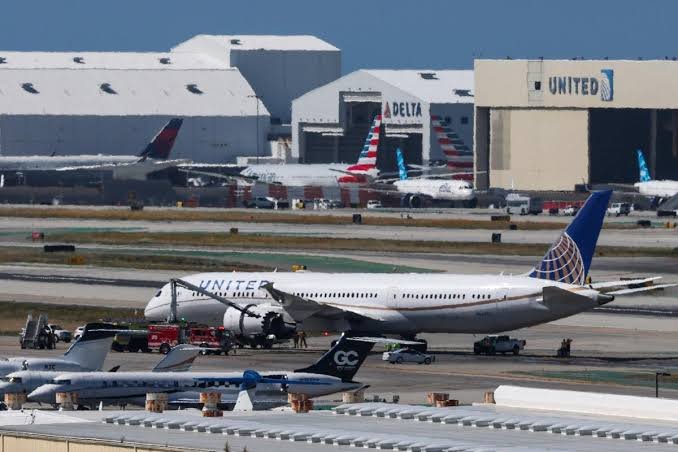
Emergency Landing
An emergency landing is one of the most misunderstood events in modern aviation. To the public, it is a near-death experience, a terrifying brush with disaster. To the pilots flying the aircraft, however, it is a highly choreographed, intensely practiced exercise in risk management.
While the media often portrays emergency landings as chaotic battles against gravity, the reality is a testament to human engineering, rigorous training, and the cold, calculated science of survival.
1. Defining the Crisis: What Constitutes an Emergency Landing?
Not all emergency landings are created equal. In aviation parlance, emergencies are generally categorized into two distinct types based on the level of urgency:
Precautionary Landings
A precautionary landing occurs when an aircraft suffers a non-critical malfunction or encounters a situation that could become dangerous if flight continues. Examples include:
- A minor system disagreement (e.g., a faulty sensor reading).
- An unruly or violently disruptive passenger.
- A localized, contained electrical issue.
- A non-critical medical emergency on board.
In these scenarios, the pilots have time on their side. They can coordinate with Air Traffic Control (ATC), burn or dump fuel to lighten the aircraft, and select the most suitable airport with the longest runways and best medical facilities.
Forced Landings
A forced landing is an immediate, non-negotiable descent because the aircraft can no longer sustain flight. The most classic example is a total loss of engine power (dual-engine failure). In a forced landing, the pilot’s primary objective changes from “comfortably reaching a destination” to “putting the aircraft on the ground with the minimum loss of life.”
Note: A specific subset of a forced landing is ditching—landing an aircraft on water. Ditching is incredibly rare and represents one of the ultimate tests of a pilot’s stick-and-rudder skills.
2. The Anatomy of an Emergency: What Triggers It?
Modern commercial aircraft are marvels of redundant engineering. Almost every critical system has a backup, and often a backup for the backup. For an emergency landing to be declared, something significant must breach these layers of redundancy.
[System Trigger] ➔ [Redundancy Fails] ➔ [Pilot Assessment] ➔ [Emergency Declared]
Engine Failures and Power Loss
Modern turbofan engines are extraordinarily reliable. The probability of a dual-engine failure on a commercial airliner is less than one in a billion flight hours. However, it does happen. Causes range from severe bird strikes (such as US Airways Flight 1549 in the Hudson River) to fuel starvation, volcanic ash ingestion, or mechanical disintegration.
Uncontained In-Flight Fires
Fire is perhaps the most feared hazard in aviation. An uncontained fire in the cargo hold, electrical bay, or cabin can compromise structural integrity and control systems within minutes. In the case of an in-flight fire, pilots do not look for the best airport; they look for the nearest piece of tarmac, period.
Severe Structural Damage or Decompression
Explosive decompression—caused by a failed door seal, a fuselage crack, or an uncontained engine failure tearing through the cabin wall—requires immediate action. Pilots must execute an emergency descent to an altitude where passengers can breathe without supplemental oxygen (typically below 10,000 feet) before assessing where to land.
3. The Protocol of the Cockpit: Aviate, Navigate, Communicate
When alarms ring and master warning lights flash red, pilots rely on a foundational axiom drilled into them from day one of flight training: Aviate, Navigate, Communicate.
| Phase | Action | Description |
|---|---|---|
| 1. Aviate | Fly the Airplane | Pitch, bank, and airspeed must be controlled. If the engines have failed, the pilot must immediately establish the optimum glide speed to maximize the distance the plane can travel without power. |
| 2. Navigate | Determine Direction | Where are we going? The pilot monitoring the instruments scans the navigation displays for the closest suitable airport, taking into account weather, terrain, and runway length. |
| 3. Communicate | Declare Emergency | Only when the plane is under control and a path is chosen do the pilots speak to the outside world. They declare a “Mayday” (imminent danger) or “Pan-Pan” (urgency but no immediate danger) to ATC. |
The Power of Checklists
In the heat of a crisis, human memory fails. Therefore, pilots use Quick Reference Handbooks (QRHs). These are highly optimized, step-by-step checklists designed to troubleshoot specific emergencies. While one pilot physically flies the aircraft, the other reads the checklist aloud, executing actions with deliberate, double-checked precision.
4. The Human Element: The Psychology of Fear and Focus
What separates a catastrophic crash from a successful emergency landing is often the cognitive performance of the flight crew under extreme stress.
Overcoming the “Startle Effect”
When an unexpected, loud alarm blares in a dark cockpit at 35,000 feet, the human brain experiences a rush of adrenaline. This is known as the startle effect, which can cause cognitive tunneling, panic, or momentary paralysis.
Modern simulator training exposes pilots to these sudden shocks repeatedly. By normalizing the stress response, pilots can bypass the panic phase and immediately activate their problem-solving brains.
Crew Resource Management (CRM)
In the early days of aviation, the captain was an absolute dictator. If the captain made a mistake due to stress, the co-pilot rarely spoke up. Today, the industry relies on Crew Resource Management (CRM). CRM promotes open communication, flat hierarchies during crises, and workload sharing.
During an emergency, the captain might delegate flying to the first officer so that they can use their superior experience to manage the big picture: talking to the airline, coordinating with the lead flight attendant, and strategizing the approach.
5. The Cabin Crew: The First Responders of the Skies
While the pilots are occupied with aerodynamics and mechanics, the flight attendants are managing the human element in the back of the aircraft.
Many passengers view flight attendants as customer service representatives who serve drinks and snacks. In reality, they are highly trained safety professionals. In an emergency landing, their role shifts from hospitality to survival leadership.
Preparing the Cabin
If time permits, flight attendants will perform an emergency cabin preparation:
- Ensuring all seatbelts are fastened tightly across the hips.
- Securing loose items in the galleys that could become lethal projectiles.
- Briefing passengers sitting in exit rows on how to operate the doors.
- Demonstrating the brace position, which is engineered to reduce forward head movement and prevent legs from snapping under the forward impact force.
The 90-Second Rule
An aircraft must be fully evacuated within 90 seconds, even if half the exits are blocked or unusable. Flight attendants train for this in dark, smoke-filled simulators. When the plane stops, their voices change from pleasant tones to booming, authoritative commands: “UNDO SEATBELTS! LEAVE EVERYTHING BEHIND! COME THIS WAY!”
6. Engineering for the Worst-Case Scenario
Modern aircraft are not just built to fly; they are built to crash and survive. Millions of dollars are spent ensuring that if an emergency landing occurs, the vehicle protects its occupants.
Energy-Absorbing Seats
Aircraft seats are rated to withstand forces up to 16G (sixteen times the force of gravity). They are designed to deform and absorb the vertical and forward shock of a hard landing, preventing spinal injuries to the passengers.
Fuel Tethers and Fire Retardants
To prevent catastrophic post-crash fires, fuel tanks are equipped with specialized valves that isolate fuel lines. Cabin materials (carpets, seat covers, wall panels) are treated with advanced chemical flame retardants that do not easily ignite and emit low-toxicity smoke if they do burn.
Ram Air Turbines (RAT)
If an aircraft loses all electrical and hydraulic power generated by its engines, a small propeller called a Ram Air Turbine (RAT) automatically drops out of the belly of the fuselage. Spun by the rushing airstream, the RAT generates just enough hydraulic and electrical power to keep the flight instruments working and the control surfaces moving, allowing the pilot to steer the plane to a safe landing.
Total Power Loss ➔ RAT Deploys ➔ Generates Emergency Power ➔ Pilot Maintains Control
7. Legendary Emergency Landings: Case Studies in Triumph
History has proven that even the most dire situations can result in a safe outcome when skill and engineering align perfectly.
The Miracle on the Hudson (2009)
Perhaps the most famous emergency landing in history. Shortly after taking off from New York’s LaGuardia Airport, US Airways Flight 1549 struck a flock of Canadian geese, causing both engines to fail completely. Captain Chesley “Sully” Sullenberger and First Officer Jeffrey Skiles realized they could not glide to an airport. Sully opted for an unprecedented ditching in the freezing Hudson River. Because of flawless CRM, precise airspeed management, and a highly professional cabin crew, all 155 people on board survived.
The Gimli Glider (1983)
An Air Canada Boeing 767 ran completely out of fuel at 41,000 feet due to a metric-to-imperial conversion error by the ground crew. The pilots were left with a massive, silent glider. Captain Robert Pearson, an experienced glider pilot, used a rare technique called a “sideslip” to rapidly lose altitude without gaining dangerous speed. He successfully landed the massive jet on an abandoned military runway in Gimli, Manitoba, which had been converted into a racetrack. There were zero fatalities.
United Airlines Flight 232 (1989)
An uncontained engine failure destroyed all three independent hydraulic systems of a DC-10, leaving the pilots with no ability to turn the flaps, rudders, or elevators. Using only the asymmetric thrust of the two remaining engines (throttling up one side to turn, lowering thrust to descend), the crew managed to guide the crippled giant to Sioux City, Iowa. While the landing was violent and resulted in fatalities, the fact that the crew managed to get the plane to an airport and save 184 of the 296 people on board remains one of the greatest feats of airmanship ever recorded.
8. The Modern Paradox: Safer Skies, Higher Anxiety
Statistically, aviation has never been safer. According to IATA and ICAO data, the accident rate for commercial jet airliners is incredibly low, often averaging less than one fatal accident per millions of flights.
Why, then, does the fear of an emergency landing remain so pervasive?
The Media Amplification Loop
In the digital age, a precautionary landing due to a smoky galley oven is instantly uploaded to social media by terrified passengers. Headlines scream about “Terror in the Skies,” conflating a highly controlled, cautious safety detour with an imminent crash. This creates a false perception that aviation is volatile, when in reality, declaring an emergency is a sign that the safety ecosystem is working exactly as intended.
Conclusion: Trusting the System
An emergency landing is not a failure of aviation; it is the ultimate expression of its safety culture. It is the moment where thousands of hours of pilot simulator training, decades of metallurgical and aerodynamic research, and the strict discipline of cabin crews converge to defeat tragedy.
The next time you fasten your seatbelt and listen to the safety briefing, remember that you are not just sitting in a vehicle; you are wrapped inside a multi-layered web of redundancies. If something goes wrong, the people at the front of the plane are not panicking. They are opening a checklist, stabilizing the aircraft, and executing a plan that has been perfected over a century of flight.
About the Author