Chelsea Dodgers
The catalyst for this unprecedented convergence is an American billionaire investor and his consortium: Todd Boehly and Clearlake Capital. When Boehly’s consortium finalized the record-breaking $3.1 billion acquisition of Chelsea FC in May 2022, following the forced departure of Russian oligarch Roman Abramovich, it did not just signal a change of personnel in the Stamford Bridge boardroom. Instead, it represented the wholesale importation of a specific, highly successful sports management philosophy meticulously engineered in the front offices of Dodger Stadium.
To understand the modern identity of Chelsea FC—its aggressive transfer windows, its controversial long-term player contracts, its emphasis on cutting-edge sports science, and its data-heavy scouting structures—one must look through the lens of the Los Angeles Dodgers. This article explores the deep, systematic connections between the “Chelsea Dodgers” umbrella, breaking down the operational blueprints, financial models, cultural friction, and the long-term outlook of this transatlantic sports empire.
1. The Architect: Who is Todd Boehly?
To dissect the Chelsea-Dodgers relationship, it is essential to look closely at the corporate mastermind behind the curtain. Todd Boehly is the co-founder, chairman, and CEO of Eldridge Industries, a private holding company headquartered in Greenwich, Connecticut. Drawing inspiration from Warren Buffett’s famous business playbook, Boehly spent decades using steady cash flow from insurance annuities to fund a massive, diversified empire spanning technology, media, real estate, and—most visibly—elite sports.
       [ Todd Boehly & Eldridge Industries ]
                       │
         ┌─────────────┴─────────────┐
         ▼                           ▼
[ Los Angeles Dodgers ]     [ Chelsea Football Club ]
(MLB - Acquired 2012)        (EPL - Acquired 2022)
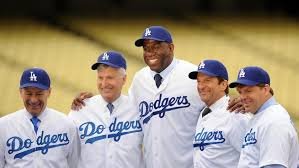
In 2012, Boehly partnered with Mark Walter, Guggenheim Partners, and baseball legend Magic Johnson to acquire the Los Angeles Dodgers for a then-historic $2.15 billion. Under this ownership group, the Dodgers underwent a massive transformation. They went from a financially mismanaged, underachieving franchise into an absolute powerhouse, winning multiple National League pennants and securing the World Series championships in 2020 and 2024.
When the opportunity arose to buy Chelsea FC in 2022, Boehly did not look at the London club as an isolated asset. He viewed it through the exact same lens as the Dodgers: a sleeping global media giant with massive under-monetized potential, ripe for the deployment of modern American sports-entertainment strategies.
2. The Dodgers Blueprint: The Foundation of Success
Before analyzing how Chelsea has evolved, it is critical to outline what the “Dodgers Blueprint” actually looks like. When Guggenheim Baseball Management took control of the Dodgers in 2012, they established a multi-layered framework that relies on three core pillars:
A. Maximizing the Local Market & Global Media
The Dodgers secured a record-shattering 25-year, $8.35 billion television rights deal with Time Warner Cable shortly after the takeover. This guaranteed an astronomical, steady stream of baseline revenue that allowed the front office to spend aggressively without fearing short-term market downturns.
B. High-Spend Aggression Coupled with Homegrown Development
The Dodgers became famous for carrying one of the highest payrolls in baseball, signing established global superstars like Mookie Betts, Freddie Freeman, and eventually the historic $700 million acquisition of Shohei Ohtani. Crucially, however, they never abandoned their youth academy. They simultaneously built one of the best minor-league farm systems in baseball, continuously churning out cheap, elite talent to balance the wage bill.
C. Advanced Analytical Primacy
The Dodgers front office, led by baseball executive Andrew Friedman, pioneered the deep integration of sabermetrics (advanced baseball statistics) and proprietary data algorithms. Every pitch, swing, defensive shift, and medical metric was logged and analyzed to find hidden value in undervalued players.
3. Transatlantic Translation: The Americanization of Chelsea FC
When Todd Boehly and Clearlake Capital (led by Behdad Eghbali) arrived at Stamford Bridge, they immediately began applying the Dodgers template to West London. However, football fans and European media were completely caught off guard by the sheer speed and scale of the transformation.
| Operational Aspect | The Los Angeles Dodgers Template | The Chelsea FC Application |
| Contract Structures | Long-term, guaranteed player contracts (e.g., 10-12 year deals to spread out luxury tax impacts). | 7 to 8-year contracts given to young signings (e.g., Enzo Fernández, Cole Palmer, Mykhailo Mudryk) to amortize FFP costs. |
| Scouting Philosophy | Massive investment in the “Farm System” (Minor Leagues) to develop internal talent. | “Vision 2030” – Aggressive hoarding of global teenage talent (South American and European youth stars). |
| Management Control | Data-driven executives sitting above the manager/coach to ensure long-term system continuity. | Replacement of old-school managers with young, tactical coaches (like Enzo Maresca) operating under co-sporting directors. |
The Amortization Strategy (The Amortization Loophole)
The most direct strategic crossover from American baseball to European football was Chelsea’s controversial use of ultra-long-term player contracts. In the MLB, signing a player to a 10-year deal is standard practice. It allows teams to spread out the financial hit against the league’s competitive balance tax.
Chelsea applied this exact logic to bypass UEFA and Premier League Profitability and Sustainability Rules (PSR). By signing young players to unprecedented 8-year contracts, Chelsea could spread the transfer fee over nearly a decade on their accounting books. For example, a £80 million signing on an 8-year contract only costs £10 million per year in amortization expenses. While this practice caused governing bodies to quickly pass new rules capping amortization at 5 years, Chelsea successfully exploited the window to completely rebuild their squad in under 24 months.
4. The Multi-Club Model: Building an Empire
In American baseball, a major league team sits at the top of a pyramid that includes Triple-A, Double-A, and Single-A minor league affiliate teams. This structure allows young talent to develop in competitive environments while playing within the parent club’s tactical framework.
Todd Boehly and Clearlake Capital recognized that European football did not have a built-in minor league system. To solve this, they created BlueCo, a multi-club ownership entity designed to replicate the Dodgers’ internal development pyramid.
                 [ BlueCo Holding Umbrella ]
                              │
         ┌────────────────────┴────────────────────┐
         ▼                                         ▼
[ Chelsea Football Club ]               [ RC Strasbourg Alsace ]
(Premier League - Elite Level)          (Ligue 1 - Development Level)
In 2023, BlueCo purchased a controlling stake in the French Ligue 1 side RC Strasbourg. The goal was simple: use Strasbourg as a high-level proving ground where Chelsea’s young, global recruits could gain valuable first-team minutes in a top-five European league before transitioning to the high-pressure environment of the Premier League. This system directly mirrors the path a young baseball prospect takes through the Dodgers’ farm system before stepping onto the field at Dodger Stadium.
5. Cultural Friction and the European Backlash
While the Chelsea-Dodgers blueprint has proven to be highly lucrative and structurally innovative, its execution has faced intense criticism from European football purists, media analysts, and local supporters. The friction stems from a fundamental clash of sporting cultures.
The “All-Star Game” Controversy
Shortly after taking over Chelsea, Todd Boehly openly mused during a conference about the potential of introducing an American-style “North vs. South” Premier League All-Star game to raise revenue for the football pyramid. The backlash from British fans and pundits was immediate and severe. To the traditional European fan, sports are built around deep-seated tribalism, history, and community identity; the idea of commercializing the game through a manufactured exhibition match felt sacrilegious.
Squad Turbulence and the Human Factor
In baseball, players are routinely traded, optioned down to the minors, or moved across the country as part of corporate roster optimization. In European football, team chemistry, dressing room morale, and regional loyalty play a much larger role.
During the initial transition phases of the Boehly-Clearlake era, Chelsea signed over 30 new players across a few transfer windows, leading to an bloated squad that forced coaches to physically alter dressing rooms. The lack of stability resulted in a disappointing 12th-place finish in the 2022/23 Premier League season. It served as a stark reminder that human athletes in a fluid, continuous sport like football cannot be swapped in and out as easily as baseball assets in a discrete, statistically isolated sport.
6. Financial Dynamics: The High-Risk, High-Reward Gamble
The economic scale of the Chelsea-Dodgers connection is staggering. The business model relies entirely on massive upfront capital investment to secure long-term asset appreciation.
[ Upfront Private Equity Capital ] ──► [ Acquire World-Class Elite Talent ]
                                                    │
                                                    ▼
[ Exponential Brand Valuation ] ◄─── [ Secure Global Media & Sponsorships ]
By spending over £1 billion on transfers within the first few years of ownership, BlueCo bet heavily on the future growth of football’s financial ecosystem. They anticipated that upcoming reforms—such as the expanded FIFA Club World Cup and newly structured continental media rights—would significantly boost the revenue of elite clubs.
Furthermore, by locking down the world’s brightest young talents on fixed, long-term wages, Chelsea protected themselves from future transfer market inflation. If a player signed to an 8-year contract develops into a world-class superstar, their market value skyrockets while their wage remains locked at a manageable, pre-negotiated rate. Conversely, if the player underperforms or suffers a severe injury, the club is left carrying a massive financial liability that is nearly impossible to shift off their books.
7. The Analytic Revolution: From Sabermetrics to Pitch Diagrams
A major asset shared between the Dodgers and Chelsea is their shared expertise in data science. The Dodgers’ success is rooted in their ability to analyze hidden metrics: spin rates, launch angles, and defensive positioning.
In football, this has led to a major shift away from traditional scouting, which relied primarily on a scout’s subjective opinion. Chelsea’s new recruitment department utilizes complex tracking data to evaluate prospective signings:
- Expected Goals (xG) & Expected Assists (xA): Assessing the true quality of chances a player creates or receives, independent of luck.
- Progressive Pass Packing: Measuring how many opposing defenders a player’s passes bypass during a match.
- High-Intensity Pressing Metrics: Tracking a player’s defensive work rate and physical output off the ball to see if they fit a high-tempo system.
This analytical overhaul ensures that whether a scout is looking at a shortstop in Santo Domingo or a left-winger in São Paulo, the evaluation process remains highly objective, deeply rigorous, and entirely aligned with corporate standards.
Conclusion: The Future of Global Sports Franchises
The intersection of Chelsea FC and the Los Angeles Dodgers is far more than a curious piece of sports trivia about shared boardroom executives. It represents a major turning point in the history of sports business. The “Chelsea Dodgers” model has proven that the strategies used to build a dominant baseball team in southern California can be modified, adapted, and deployed to run a Premier League giant in West London.
As Chelsea’s squad stabilizes under tactical coaching, and with the Dodgers continuing their regular-season dominance in the MLB, this transatlantic experiment is transitioning from a chaotic disruptive phase into a highly structured, sustainable reality. For sports fans and business analysts alike, the BlueCo empire offers a fascinating preview of the future: a world where elite sports teams are no longer isolated local institutions, but highly integrated, data-driven nodes within a massive, interconnected global entertainment network.
About the Author